Calculating the torque of a hydraulic motor is a fundamental aspect of understanding its performance and ensuring it meets the requirements of various industrial applications. As a trusted hydraulic motor supplier, I have witnessed firsthand the importance of accurate torque calculations in selecting the right motor for specific tasks. In this blog post, I will share insights on how to calculate the torque of a hydraulic motor, and why this knowledge is crucial for making informed purchasing decisions. Hydraulic Motor

Understanding the Basics of Torque in Hydraulic Motors
Torque is essentially the rotational force that a hydraulic motor can generate. It is measured in Newton – meters (N·m) in the SI system, or in pound – feet (lb·ft) in the imperial system. The torque produced by a hydraulic motor is what enables it to drive machinery, rotate shafts, and perform work.
To understand how torque is calculated, we first need to recognize the three key factors that affect the torque output of a hydraulic motor: hydraulic pressure, displacement, and mechanical efficiency.
The Role of Hydraulic Pressure
Hydraulic pressure is the force per unit area exerted by the hydraulic fluid within the motor. It is typically measured in Pascals (Pa), but more commonly in bars or pounds per square inch (psi). The pressure is generated by the hydraulic pump, which sends pressurized fluid into the motor.
Higher hydraulic pressure generally results in higher torque output. This is because the force exerted on the motor’s internal components, such as pistons or gears, is directly related to the pressure of the fluid. The relationship between pressure and force is given by the formula (F = P\times A), where (F) is the force, (P) is the pressure, and (A) is the area.
Displacement of the Hydraulic Motor
Displacement refers to the volume of fluid that the hydraulic motor can displace in one complete revolution. It is measured in cubic centimeters per revolution ((cm^{3}/rev)) or cubic inches per revolution ((in^{3}/rev)). A larger displacement means that the motor can handle more fluid in each cycle, which in turn can result in higher torque.
For example, a motor with a large displacement will be able to move a larger amount of fluid with each rotation, and this fluid movement can generate a greater rotational force. Displacement is a characteristic of the motor’s design and is typically specified by the manufacturer.
Mechanical Efficiency
Mechanical efficiency takes into account the losses that occur within the hydraulic motor due to factors such as friction, leakage, and internal resistance. It is expressed as a percentage and represents the ratio of the actual output torque to the theoretical torque.
No hydraulic motor is 100% efficient, and mechanical efficiency values typically range from 80% to 95%. A higher efficiency means that less energy is wasted, and more of the input power is converted into useful torque.
The Torque Calculation Formula
The theoretical torque ((T_{th})) of a hydraulic motor can be calculated using the following formula:
[T_{th}=\frac{\Delta P\times V}{2\pi}]
Where:
- (T_{th}) is the theoretical torque in N·m
- (\Delta P) is the pressure difference across the motor in Pa
- (V) is the displacement of the motor in (m^{3}/rev)
To convert the displacement from (cm^{3}/rev) to (m^{3}/rev), you divide the value in (cm^{3}/rev) by (1,000,000).
However, to get the actual torque ((T_{act})), we need to consider the mechanical efficiency ((\eta_{m})) of the motor:
[T_{act}=T_{th}\times\eta_{m}]
Step – by – Step Torque Calculation Example
Let’s assume we have a hydraulic motor with the following specifications:
- Displacement: (V = 100\ cm^{3}/rev=100\times10^{- 6}\ m^{3}/rev)
- Pressure difference across the motor: (\Delta P = 200\ bar = 200\times10^{5}\ Pa)
- Mechanical efficiency: (\eta_{m}= 0.9)
First, we calculate the theoretical torque:
[T_{th}=\frac{\Delta P\times V}{2\pi}=\frac{200\times10^{5}\ Pa\times100\times10^{-6}\ m^{3}/rev}{2\pi}]
[T_{th}=\frac{200\times10^{5}\times100\times10^{-6}}{2\pi}\ N\cdot m=\frac{20}{2\pi}\ N\cdot m\approx3.18\ N\cdot m]
Then, we calculate the actual torque:
[T_{act}=T_{th}\times\eta_{m}=3.18\ N\cdot m\times0.9 = 2.86\ N\cdot m]
Importance of Accurate Torque Calculation
Accurate torque calculation is essential for several reasons. Firstly, it helps in selecting the right hydraulic motor for a particular application. Different tasks require different levels of torque. For example, a heavy – duty winch may need a motor with a high torque output, while a small conveyor belt may only require a motor with a relatively low torque.
Secondly, understanding the torque requirements can prevent over – sizing or under – sizing of the motor. Over – sizing a motor can lead to increased costs, both in terms of the initial purchase price and the energy consumption. On the other hand, under – sizing a motor can result in poor performance, premature wear, and even motor failure.
Finally, accurate torque calculation enables better system design and optimization. By knowing the exact torque needs, engineers can design hydraulic circuits that are more efficient and reliable.
How Our Hydraulic Motors Can Meet Your Torque Requirements
As a hydraulic motor supplier, we understand the importance of providing motors that can deliver the required torque for your specific applications. Our product range includes a variety of hydraulic motors with different displacements, pressure ratings, and efficiency levels.
We offer detailed product specifications that include displacement, pressure limits, and mechanical efficiency values. This information allows you to accurately calculate the torque output of our motors and select the one that best suits your needs. Our team of experts is also available to assist you with torque calculations and motor selection. Whether you are working on a small – scale project or a large industrial application, we can provide the right hydraulic motor solution.
Conclusion
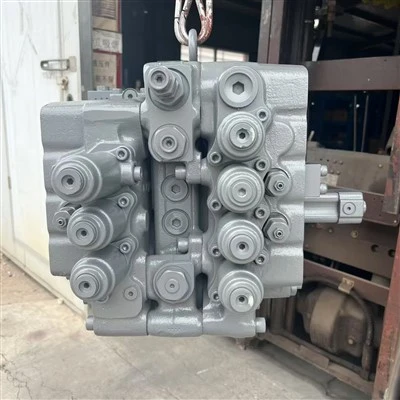
Calculating the torque of a hydraulic motor is a critical step in ensuring the proper functioning of your hydraulic system. By understanding the factors that affect torque, such as hydraulic pressure, displacement, and mechanical efficiency, and using the appropriate formulas, you can accurately determine the torque requirements for your application.
Hydraulic Parts As a reliable hydraulic motor supplier, we are dedicated to providing high – quality motors and expert support. If you are in the process of selecting a hydraulic motor for your project, we encourage you to reach out to us. Our team can help you with torque calculations, motor selection, and any other questions you may have. Contact us to discuss your specific needs and start a purchasing negotiation today.
References
- "Fluid Power with Applications" by Anthony Esposito. This textbook provides in – depth knowledge on hydraulic systems, including the principles of torque calculation in hydraulic motors.
- Manufacturer’s technical documentation. The product manuals and datasheets from hydraulic motor manufacturers offer detailed specifications and performance characteristics useful for torque calculations.
Yantai Dayun Machinery Parts Co., Ltd.
As one of the most professional hydraulic motor suppliers in China, we are committed to providing high quality products with low price. Please feel free to buy discount hydraulic motor in stock here from our factory. Contact us for quotation and free sample.
Address: NO91, Zhenzhong Street, Fushan District, Yantai City
E-mail: dayunhyd5123@163.com
WebSite: https://www.dayunexcavator.com/
