Hey there, if you’re running a facility that relies on natural gas compressor series — whether you’re midstream, upstream, or even operating a large industrial plant — you know these units don’t just run on their own 24/7 without a little TLC (and sometimes, catching small issues before they blow up into huge, costly headaches). As someone who’s been a natural gas compressor supplier for over a decade, I’ve seen it all: customers brushing off a tiny vibration that turned into a full compressor replacement 6 months later, or ignoring a weird noise that shut down their entire pipeline for 3 days during peak winter. The good news is, most potential problems don’t sneak up out of nowhere — they send really clear signs, if you know what to look for. Let’s break down the biggest red flags I’ve seen our customers miss, and what they actually mean for your equipment. Natural Gas Compressor Series

First up: abnormal vibration levels. This is probably the most common telltale sign we see, and honestly, it’s the one we drill into every new customer during our onboarding calls. But not all vibration is bad, right? Compressors do hum a little when they’re running. The key is tracking changes — like, if your unit’s vibration spiked from 0.2 inches per second to 0.8 in a week, that’s not normal. I remember a midstream customer in Texas who called us panicking a few years back, saying their compressor was “shaking like a lawnmower with a loose blade.” When our techs got there, we found a broken coupling bolt that had loosened because of uneven wear on the crankshaft. If he’d waited another week, the crank would have seized up entirely, costing him way more in downtime than the $500 bolt replacement. What causes this sudden vibration? Usually things like misalignment (from poor installation or just years of heat and cold expansion), worn bearings, or even gas pulsations that your compressor’s inline dampers aren’t handling anymore. Pro tip we give all our clients: invest in a basic vibration monitor, not just annual checks. Most of the cheap ones we sell come with free app alerts, so you’ll get a text the second levels go above your custom threshold.
Next: weird, off noises. Not the standard low growl of a running compressor — the stuff that makes you stop what you’re doing and go, “Wait, that’s not right.” I’m talking about high-pitched squeals, grinding, knocking, or even a rattling that sounds like a loose part. Let’s break these down because they mean different things. A high-pitched squeal? That’s almost always a seal issue — either the shaft seal or the gas end seal. Seals wear out over time, especially if you’re working with natural gas that has a lot of impurities (like sulfur or water vapor). We had a customer in the Marcellus Shale last year who ignored a faint squeal for 2 months; by the time he replaced the seals, the gas had already corroded the shaft, so he had to replace that part too, adding 3x to his repair cost. Then there’s that deep knocking noise. That’s usually coming from the crankcase or the piston. If it’s a light knock that comes and goes, maybe just a loose connecting rod bolt. But if it’s a loud, constant knock? That’s a piston or rod that’s worn out, or maybe even liquid slugging — that’s when liquid (like condensate or even water) gets into the compressor cylinders, and liquid doesn’t compress, so it creates a huge pressure spike that damages parts. Rattling is usually something loose: broken mounting bolts, worn parts inside the compressor, or even a foreign object that got sucked into the gas stream. Never brush off a weird noise — we’ve seen customers lose entire compressors because they thought a “little rattle” was no big deal.
Third sign: fluctuating discharge pressure or flow rates. Your compressor is supposed to push gas at a consistent pressure, right? If you’re seeing it jump up and down 10-15 psi for no reason, that’s a problem. Or if your flow rate is dropping even though your suction pressure is steady, that’s another red flag. Let’s make this relatable: think of your compressor like a pump moving water. If the pressure jumps around, something’s blocking the flow or the pump’s impeller is worn. For compressors, fluctuating discharge pressure usually ties back to valve issues — the intake or discharge valves that let gas in and out of the cylinders. Valves are like the lungs of your compressor, and they get worn out from constant use, or dirty from gas impurities. If a valve isn’t sealing properly, gas leaks back into the cylinder instead of being pushed out, which makes pressure bounce around. Another cause could be a fouled intercooler. Intercoolers are the units that cool down the gas between compressor stages, so it’s easier to compress. If they get clogged with dirt, rust, or residue, the gas stays too hot, which lowers efficiency and can cause pressure swings. I had a customer in Louisiana last year who was complaining his flow rate was down 20% — we checked his intercooler, and it was almost completely blocked with pipeline scale that had built up over 2 years. He’d been skipping his quarterly maintenance, which is why this issue went unnoticed.
Fourth: high discharge or oil temperatures. Your compressor has two main temperature stats to watch: the discharge gas temp (the temp of the gas coming out of the compressor cylinder) and the oil temp (the temp of the lubricant that keeps all the moving parts from grinding together). Normal oil temp for most of the units we supply is between 140-160°F; if it’s creeping above 180°F, that’s a problem. Discharge gas temp should be under 350°F for natural gas service. If either is higher, that’s a sign something’s wrong. Why do these temps spike? Let’s start with oil temp. Most of the time, it’s low oil level — either a leak somewhere in the lubrication system, or you just didn’t top it off during maintenance. If there’s not enough oil, the bearings and crankshaft rub together, creating friction that heats everything up. But it could also be a clogged oil filter, which stops oil from flowing to the parts that need it, or a failing oil cooler (the unit that cools the oil down). High discharge gas temp is often tied to those valve issues I mentioned earlier, or even a leak in the cylinder packing. If gas is leaking past the piston rings, it doesn’t get compressed properly, which makes the gas hotter than it should be. We had a customer who thought his compressor was just running “hot” in the summer, but his oil temp hit 200°F during a heatwave. Turns out, his oil cooler fan was broken — he’d been meaning to fix it for months, and by the time he did, he had to replace two bearings that seized up from the excess heat.
Fifth: increased energy usage without a change in load. This is a big one that a lot of customers miss because they don’t track their compressor’s energy use closely. Let’s say your facility uses the same amount of natural gas, so your compressor should be running at the same load every month. But suddenly, your electricity bill for the compressor is 15% higher, for no obvious reason — that’s a sign your compressor is working way harder than it should. Why? Because it’s inefficient, and that inefficiency is usually from worn parts or something wrong with the system. For example, if your valves are worn, the compressor has to work longer to push the same amount of gas, which uses more energy. Or if your intercooler is fouled, as I mentioned earlier, the gas is hotter, so the compressor has to do more work to compress it to the right pressure. Even something as simple as a dirty air filter (wait, some compressors have air intake filters) can make the compressor work harder, using more energy. I had a customer in Ohio who noticed his energy bill went up $2,000 a month and couldn’t figure out why. We ran an efficiency test on his compressor, and found that his cylinder rings were worn to the point where he was losing 25% of his compression to leaks. Replacing the rings dropped his energy use back down immediately, and saved him even more on his gas bills down the line.
Last, but definitely not least: oil contamination or unusual oil appearance. The lubricating oil in your compressor is there to keep parts clean and cool, so if it’s not working right, that’s a huge problem. What should normal compressor oil look like? It should be amber, translucent, and pretty consistent in color. If it’s cloudy, gritty, dark, or has water in it, that’s a red flag. Water in the oil is super common in natural gas compressors, especially if you’re processing gas with high moisture content. Water mixes with the oil, breaking down its lubricating properties, and can cause corrosion inside the crankcase. Gritty or dirty oil is usually from impurities in the gas — dirt, sand, pipeline residue — getting past the intake filter and getting into the oil. Dark oil that looks like sludge means the oil has oxidized, which happens when the compressor is running too hot for too long. I once had a customer who didn’t change his oil for 3 years (don’t do that, by the way, our recommendation is every 6 months for most natural gas service) — when we drained the oil, it was almost black, and there was sludge caked on the bearings. He had to replace the entire crankshaft because of the corrosion, which cost him 10x more than regular oil changes would have.
Now, I know a lot of people reading this might think, “This is just preventative maintenance stuff.” But here’s the thing: 90% of the compressor failures we see our customers deal with are totally avoidable, if they catch these signs early. The worst part is, every minute a compressor is down costs you money — whether that’s lost pipeline revenue, shutdowns at an industrial plant, or fines for not meeting gas transport standards. As a natural gas compressor supplier, our whole job isn’t just selling units (though we do that, obviously) — it’s helping our customers keep their equipment running smoothly, so they don’t have to deal with the mess of a catastrophic failure.
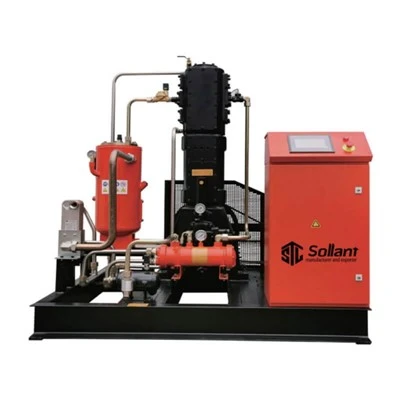
If you’re noticing any of these signs in your natural gas compressor series, don’t wait until it’s too late. We’ve got techs on call 24/7 to run diagnostics, supply replacement parts, or even help with full overhauls if you need them. Whether you’re a midstream operator managing a network of compressors, an upstream producer, or an industrial facility relying on gas for your processes, we’ve worked with all kinds of setups, and we can help you get to the bottom of whatever’s going on with your unit. There’s no need to stress over downtime or expensive repairs — reach out and let’s chat about your needs. We can walk you through simple checks you can do on your own, or schedule a full inspection if you think something’s off.
High-Pressure Booster Air Compressor Reference:
- Gas Machinery Research Council. “Natural Gas Compressor Condition Monitoring: Best Practices for Early Fault Detection.” 2022.
- American Petroleum Institute. “Specification for Stationary Natural Gas Compressors (API 11P).” 2020.
- North American Energy Standards Board. “Preventive Maintenance Protocols for Midstream Compression Infrastructure.” 2021.
- Compressed Air and Gas Institute. “Guidelines for Monitoring Compressor Performance and Failure Risk.” 2019.
Shanghai Sollant Energy Saving Technology Co., Ltd.
As one of the most professional natural gas compressor manufacturers and suppliers in China, we’re featured by quality products and good service. Please rest assured to buy bulk durable natural gas compressor from our factory. Welcome to view our website for more information.
Address: No.215, Songri Center, Beihongqiao, Jiading District, Shanghai, China.
E-mail: info3@sollant.com
WebSite: https://www.sollant-gas.com/
