If you’ve ever overseen a warehouse move, a manufacturing line restructure, or a large-scale inventory replenishment, you’ve probably stared at a spread of empty floor space and a pile of half-used stillages, wondering, “How many do I actually need?” For years, I heard this question from project managers across every industry—auto parts, e-commerce fulfillment, food and beverage, even aerospace component suppliers. As a stillages vendor, I don’t just sell metal frames that hold pallets or bulk goods; I help teams avoid two costly mistakes: ordering too many stillages and tying up capital in idle equipment, or ordering too few and forcing crews to use flimsy makeshift storage that leads to damaged inventory and delayed timelines. Stillages
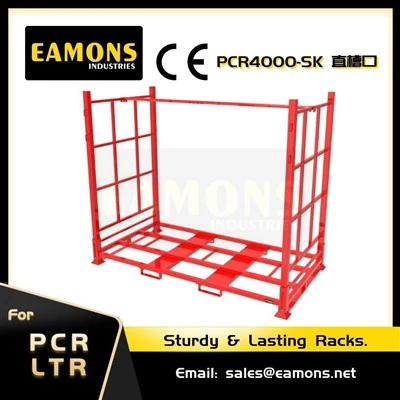
A few years back, I worked with a mid-sized automotive parts plant in Detroit that was gearing up to launch a new line of electric vehicle battery enclosures. Their operations manager, Dave, came to me panicking because their 2019 project order of 120 stillages had left them with 40 unused units sitting in a corner, collecting dust and costing them $1,200 a month in storage rental. For their 2022 expansion, Dave initially planned to order 150 stillages—his go-to number from the last project—until we walked through a step-by-step calculation together. By the end of our conversation, he revised his order to 98 stillages, and later told me that number was perfect for their production flow. That’s the value of getting the calculation right, and it starts with breaking down the specific variables that apply to your project, not just relying on guesswork.
First, you need to map out your core project needs, and that means auditing two things: the total volume of goods you’ll be handling during the project, and how those goods will be stored and moved. Let’s start with volume. Most projects have a defined scope: a holiday restock for a retail client, a 12-week production run for a construction component order, a warehouse relocation for a regional distributor. You’ll want to pull the most accurate data available here, because under or overestimating volume skews every other calculation. For Dave’s battery enclosure line, that meant factoring in 4 weeks of trial production, 8 weeks of full production, and 2 weeks of buffer for unexpected shifts in order volume, totaling 2,400 units that each required a dedicated storage spot on a stillage.
But volume alone isn’t enough. The next variable is load capacity per stillage. Not all stillages are the same—some are rated for light, stacked parts, others for heavy, unpalletized raw materials. For Dave’s enclosures, each stillage could hold 25 fully assembled units, so 2,400 divided by 25 gave him a raw number of 96 stillages to hold all finished goods. That’s a rough baseline, but here’s where most people stop, and miss two critical factors: turnaround time and workflow efficiency.
Turnaround time is how often a stillage is emptied and returned to circulation. Think of it like borrowing a book from a library: if a stillage is checked out to the assembly line for 2 days, then returned to the storage area for another line to use, you don’t need a stillage for every single unit—you need enough to cover the demand for that time frame. For Dave’s line, each stillage spent 2 days on the assembly line being loaded with finished enclosures, then 1 day in a staging area waiting to be shipped, so the total turnaround time was 3 days. Over a 7-day week, that means each stillage cycles through 2 times (7 days divided by 3 days is roughly 2.3, rounded to 2 full cycles). That changes the calculation entirely.
Let’s formalize that for clarity. If you have a total required units for your project (let’s call that U), the load capacity per stillage (C), and the number of cycles a stillage completes in your project timeline (T), the formula for minimum required stillages is (U / C) / T. For Dave, that’s (2,400 / 25) / 2 = 96 / 2 = 48? Wait, no—wait, hold on, I skipped a key step here. That formula gives you the minimum number of stillages needed to keep up with demand, but you always need to add a buffer for downtime, damage, and unexpected workflow hits.
Wait, let’s correct that with real numbers, because that’s where projects go off track. For Dave, his 2,400 units over 14 weeks of production meant 171 units per week, or about 24 units per day. Each stillage holds 25 units, so per day he needs enough stillages to hold 24 units—roughly 1 stillage per day. But if a stillage takes 3 days to cycle, that means he needs enough stillages to cover 3 days of demand, right? Because on day 1, you use Stillage A to hold 24 units, it goes to staging. Day 2, you use Stillage B, and Stillage A comes back empty from staging to be refilled. Day 3, you use Stillage C, and Stillage B comes back. Day 4, Stillage A is empty again. So for a 3-day turnaround time, you need 3 stillages to cover daily demand of 24 units? Wait, that makes more sense. Let’s adjust the formula to be practical for day-to-day operation, not just math class.
The more accurate, project-friendly formula I use with all my clients is:
Required Stillages = (Daily Volume of Goods) × (Turnaround Time in Days) × (1 + Buffer Factor)
Daily Volume is how many units, pallets, or bulk bins you need to move each day of the project. For Dave, that was 24 finished battery enclosures per day. Turnaround Time is the number of days a stillage is out of circulation—either being loaded with goods, moved between stations, staged for shipping, or repaired. For his line, that was 2 days: 1 day on the assembly line being filled, 1 day in staging waiting for the shipping team. Shipping only ran every other day, so sometimes that staging time was 1.5 days, but we rounded up to 2 days to be safe. The Buffer Factor is the kicker here—this is a percentage you add to cover hiccups: a stillage that gets a small dent and needs to be taken out of service for a day, a rush order that adds 10% more volume, a delay in shipping that makes staging time longer. The buffer is usually 10% to 25%, depending on how predictable your project is. For a new production line with untested workflows, a 20% buffer is smart; for a repeat project with a proven routine, 10% works.
Plugging Dave’s numbers into this: 24 daily units × 2 day turnaround = 48 stillages needed to keep up with daily demand, then add 20% buffer for unforeseen hits: 48 × 1.2 = 57.6, so rounded up to 58. Wait, but earlier I thought Dave’s order was 98—oh, right, because he also needed stillages for raw materials, not just finished goods! That’s the part I almost missed. The formula applies to every part of your supply chain during the project: raw materials coming in, work-in-progress (WIP) between stations, and finished goods going out. Most projects only calculate for finished goods, but WIP is a huge gap. For Dave, his battery enclosures required raw aluminum frames, wiring harnesses, and cooling systems, each stored on separate stillages. The WIP stillages between each assembly station added another 30 units, and the raw material stillages for incoming parts added another 10. Adding that to the 58 finished goods stillages gave him the 98 units he ended up ordering, which was exactly what he used—no extra, no shortages.
That’s the biggest mistake I see first-time project managers make: only accounting for one segment of the workflow, not the whole chain. A warehouse move, for example, needs stillages for incoming inventory being loaded, inventory being staged during the move, and inventory being unloaded at the new location. Each of those segments has its own daily volume and turnaround time. If you only calculate for incoming inventory, you’ll miss the stillages needed for staging, leading to a bottleneck that halts the entire move for hours.
Another variable that people overlook is stillage compatibility with their equipment. A stillage that works in a standard warehouse forklift might not fit a narrow-aisle forklift or a conveyor system, and the dimensions matter too. If your stillage is too tall to fit under a loading dock or too wide to fit between workstations, you’ll end up with unused units that are unusable, or you’ll need extra stillages to compensate for lost space. That’s why I always suggest doing a quick equipment audit before finalizing numbers: measure the width of your forklift forks, the clearance between your workstation aisles, the height of your loading docks, and make sure the stillages you’re ordering fit those specs. For a food and beverage client I worked with a few years ago, they ordered standard stillages for their canned goods warehouse, only to realize the narrow aisles in their new distribution center meant they needed 10-inch narrower stillages. The original order of 70 had to be adjusted to 82, because the narrower units held slightly less volume per stillage—so the calculation didn’t just change the number, it changed the load capacity variable in the formula too.
There’s also the difference between permanent stillages and rental stillages, which impacts how you calculate number needed. If you’re buying stillages for a long-term project (6 months or more), you might opt for a slightly lower number and build buffer into the formula, because you can repair or recondition units if they get damaged. If you’re renting stillages for a short-term project (less than 3 months), you’ll want a higher buffer, because rental providers often have limited stock and you don’t want to wait for a replacement if a stillage breaks. For a construction company doing a 3-month residential development project, renting 60 stillages with a 25% buffer is smarter than buying 50 and risking delays mid-project.
Let’s walk through a real-world example for a common project: a 10,000-square-foot e-commerce holiday restock, which is one of the most common uses for stillages. This is a short, high-volume project that runs 12 weeks, with a daily inbound volume of 500 retail boxes, and a daily outbound volume of 450 boxes. The turnaround time for stillages: inbound stillages take 1 day to unload and stage, WIP stillages take 2 days to move from staging to picking, and outbound stillages take 1 day to load for shipping.
First, calculate for each segment:
- Inbound stillages: Daily inbound volume (500 boxes) divided by load capacity (20 boxes per stillage) = 25 per day. Turnaround time: 1 day, so 25 × 1 = 25. Add 15% buffer for holiday volume spikes: 25 × 1.15 = 29.
- WIP stillages: Daily picking volume (450 boxes) divided by 20 per stillage = 22.5. Turnaround time: 2 days, so 22.5 × 2 = 45. Add 15% buffer: 45 × 1.15 = 52.
- Outbound stillages: Daily shipping volume (450 boxes) divided by 20 per stillage = 22.5. Turnaround time: 1 day, so 22.5 × 1 = 22.5. Add 15% buffer: 22.5 × 1.15 = 26.
Total required stillages for this holiday restock: 29 + 52 + 26 = 107. That’s a realistic number, and if you only calculated for inbound, you’d end up with 29, which is way too low to handle WIP and outbound, leading to packed aisles and delayed orders.
Now, what if you don’t have the exact daily volume numbers? That’s common for projects in the planning phase, before full production or inventory counts are finalized. In that case, use industry averages for your sector to ballpark, then add 10% extra to adjust for uncertainty. For manufacturing, average daily production volume is usually available from past projects, so that’s easy. For retail restocks, you can use last year’s holiday volume plus a small growth factor. If you’re moving a warehouse, you can use the total inventory volume divided by your average stillage capacity, then add 20% for staging and turnaround.
Another tip: talk to your stillage vendor early in the project planning phase, not after you’ve already ordered or placed your first goods. Vendors like me have decades of experience working on projects like yours, and we can spot gaps in your calculation that you might miss. For Dave’s battery line, I noticed he didn’t account for stillages that would need to be tagged for traceability—something required for automotive parts, so each stillage would need extra space for a QR code, reducing the load capacity by 5%. That meant he needed 5% more stillages than his initial calculation, which added up to 4 extra units that he would have missed if I hadn’t pointed it out.
Once you have your final number, don’t forget to consider storage for stillages themselves. If you’re storing empty stillages between uses, you need space to stack them—most stillages are stackable, but you still need to account for that space in your facility layout. If you’re short on space, you can opt for collapsible stillages, which fold flat when empty, so you can store 3 times as many empty stillages in the same space. That’s a good add-on if your project is in a tight space, and it means you don’t need as many stillages overall, because empty ones take up less room when being stored.
At the end of the day, calculating the number of stillages needed isn’t just math—it’s understanding your workflow, your constraints, and the small details that can make or break a project. Over my years in this business, I’ve seen projects saved by a few extra stillages that prevented a bottleneck, and projects derailed by ordering too many that tied up thousands of dollars in idle equipment. When Dave contacted me a year after that initial project, he was already planning his next line, and he told me the 98 stillages had run perfectly—only needing to order 2 extra units when they added a third assembly station, because we’d calculated the buffer and WIP correctly.

If you’re gearing up for a project and want to get the stillage count right the first time, don’t rely on guesswork. Reach out to discuss your project details, so we can walk through the calculations, account for your specific workflow, equipment, and sector needs, and make sure you order exactly what you need—no more, no less.
Stack Racks References
- Material Handling Industry of America. (2021). Stillage Selection and Workflow Optimization for Manufacturing and Distribution Projects. MHIA Technical Report.
- Supply Chain Digest. (2022). Avoiding Common Pitfalls in Warehouse and Production Project Equipment Planning. SCM Research Paper.
- Occupational Safety and Health Administration. (2020). Guidelines for Load Capacity and Compatibility of Industrial Storage Equipment. OSHA Publication.
Qingdao Eamons Industries Co., Ltd.
As one of the most professional stillages manufacturers and suppliers in China, we’re featured by quality products and good service. Welcome to buy bulk customized stillages made in China here from our factory. If you have any enquiry about cooperation, please feel free to email us.
Address: Room 1720, Poly Center Mansion, No. 1068 Jinshui Road, Licang District, Qingdao City, Shandong Province, China
E-mail: Sales@eamons.net
WebSite: https://www.eamons.net/
