If you’ve ever held a smartphone that fits snugly in your palm, or opened a laptop that doesn’t feel flimsy when you tap its keyboard, you’ve encountered a small piece of a manufacturing process I’ve spent 12 years perfecting: die casting molds for the electronics industry. As a die casting mold supplier, I don’t just send designs to a factory floor and call it done. I work with engineers, product designers, and quality teams to create molds that turn raw metal into parts that keep billions of devices running—parts that most people never notice, but that make every gadget they use work reliably, safely, and affordably. Let me walk you through how this works, why our molds matter, and where this technology is heading. Die Casting Mold
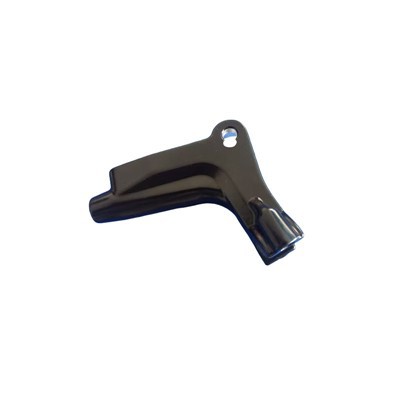
First, let’s demystify die casting for anyone who’s not a manufacturing nerd. Die casting is a process where molten metal—usually aluminum, zinc, or magnesium—is injected under high pressure into a custom-made mold, where it cools and solidifies into a precise shape. The molds I design and build are the heart of this: if the mold is off by even a few thousandths of an inch, the final part won’t fit, won’t hold its structural integrity, or will corrode prematurely. For electronics, that margin of error is non-negotiable. A component that’s millimeters too big might block the internal battery of a smartphone; one that’s too small won’t shield the circuit board from electromagnetic interference (EMI) that could make calls drop or data fail.
Now, let’s get into the real-world applications that keep our orders rolling in, and why electronics manufacturers rely on die casting molds more than any other manufacturing method today. The biggest use case by far is structural enclosures. Think of the midframe of a smartphone—the part that sits between the glass front, the internal components, and the back cover. This midframe doesn’t just hold everything together; it’s the backbone that distributes shock if you drop your phone, protects the delicate circuit boards from accidental bumps, and shields sensitive parts from EMI. A plastic midframe can do most of that, but it’s heavier, less rigid, and worse at blocking radio waves. Aluminum die-cast midframes, on the other hand, are lightweight (about a third the weight of steel), incredibly strong, and naturally EMI-shielding. Our molds are designed to include tiny, integrated features—like snap-fit clips for the camera module or alignment holes for the charging port—so the midframe arrives at the assembly line ready to install, with no extra machining needed. That cuts production time by days and reduces defect rates, which is why every major smartphone brand has switched to die-cast midframes for their premium models over the last seven years.
Laptop and tablet enclosures are another huge segment. Consumers want thin, light devices that feel premium, and manufacturers want parts that are cheap to mass-produce and can withstand years of use. Zinc and magnesium die casting are perfect here. Zinc has a high dimensional stability, so our molds can create the slim, seamless sides of a laptop that don’t warp even after thousands of times of opening and closing. Magnesium is even lighter than aluminum, making it ideal for 2-in-1 tablets that need to balance portability and sturdiness. For a while, some brands tried 3D-printed metal parts for small runs, but that’s too slow and too expensive for the millions of laptops sold every year. Die casting molds, by contrast, can produce tens of thousands of identical parts a month with almost zero variation—something 3D printing still can’t match at scale.
Next up: heat sinks. Electronics generate heat, and too much of it is the fastest way to kill a device or slow it down. A gaming laptop, for example, can have a powerful CPU and GPU that get hot enough to melt plastic if they don’t have a way to dissipate that heat. Die-cast heat sinks, with their thin, evenly spaced fins, are more efficient than plastic or copper equivalents, and our molds are designed to create those fins with consistent thickness (often less than a millimeter) without causing defects like porosity or warping. Porosity is a big deal here—if a heat sink has tiny air bubbles inside, it can’t conduct heat as well. We use CAD modeling and finite element analysis (FEA) when designing our molds to map out how the molten metal will flow, so we can place vents and injection points to eliminate those bubbles before the metal even touches the mold. That’s the kind of attention to detail that keeps our clients’ devices running cool during hours of gaming or video editing.
Smaller, less obvious components also rely on our molds, and they’re just as critical. Take connector housings. USB-C ports, audio jacks, and the tiny connectors that link the battery to a smartphone’s circuit board need to be precise enough to make a solid electrical connection every time you plug in a cable. A plastic connector might work for a few dozen uses, but a die-cast zinc connector housing can last for thousands of insertions without wearing down. The tiny pins inside the connector are integrated into the mold’s design, so they align perfectly every time, reducing the chance of a loose connection that would stop a device from charging or syncing data. Then there are EMI shielding gaskets and clips. These small metal parts sit between circuit boards and the enclosure, blocking outside radio waves from interfering with signals and preventing the device’s own signals from leaking out. Our molds are custom-cut to create these gaskets with exact dimensions, so they fit flush every time—no gaps mean no EMI issues, which is a must for devices like medical monitors or satellite-linked wearables that rely on reliable signal transmission.
But die casting in electronics isn’t just about making parts that work—it’s about making parts that are sustainable, which is a huge priority for manufacturers right now. Die-cast metal parts are 100% recyclable, unlike many plastic parts that end up in landfills. Our molds are designed to minimize material waste: because the injection process is so precise, the amount of excess metal (called sprue and runner) that’s cut from each part is far less than with stamping or machining. For a smartphone midframe, for example, stamping a piece from a solid aluminum block can waste up to 70% of the metal as shavings. Die casting uses almost all the molten metal injected, so we reduce material costs and cut down on waste. That’s a selling point we push hard with our clients—they get a better part, at a lower cost, and can market their device as more eco-friendly. Over the last three years, 60% of our orders for electronics molds have been for parts that are explicitly labeled as recyclable, and that number is only going up.
Of course, it’s not all smooth sailing. The biggest challenge we face is keeping up with the pace of innovation in electronics. Two years ago, when foldable phones started hitting the market, our clients came to us needing die-cast hinge components that could flex millions of times without breaking. That required rethinking the mold design: we had to create molds that could form parts with ultra-thin, flexible sections that still had enough strength to support a foldable screen. We worked with the hinge designers for six months, running 12 different mold prototypes, to get the alloy composition and the mold’s cooling channels exactly right. Now those hinges are in most new foldable phones, and we’re still refining the molds to make them thinner and lighter for next-gen models that fold even smaller. Another recent challenge is electric vehicle (EV) on-board chargers (OBCs). EVs have built-in chargers that convert AC power from a wall outlet to DC power for the battery, and those OBCs need compact, lightweight heat sinks and enclosures that can handle high power levels. We’ve been designing molds for OBC parts for the last two years, and demand has tripled since 2022 as more EV models launch.
As a die casting mold supplier, what sets us apart is that we don’t just sell a product—we solve problems. When a client comes to us with a new device, we don’t just take their CAD file and build a mold. We ask questions: What’s the budget? What’s the production volume? What’s the expected lifespan of the product? Are there any regulatory requirements (like for medical electronics, which need parts that are biocompatible)? We then adjust the mold design accordingly. For example, if a client is making a medical wearable, we’ll use mold materials that can be sterilized repeatedly with ethylene oxide, a common method for medical devices, without cracking or corroding. If a client is making a high-volume consumer product, we’ll design the mold to run 24/7 for months without needing major repairs, which cuts downtime and costs for them.
Looking ahead, the future of die casting molds in electronics is even more exciting. We’re starting to integrate 3D-printed inserts into our molds, which lets us create complex cooling channels that conform exactly to the shape of the part being cast. That reduces cooling time by up to 30%, which means faster production and less energy use. We’re also using IoT sensors in some of our molds to monitor temperature, pressure, and wear in real time, so our clients can catch issues before they lead to defective parts. For example, a sensor embedded in a mold for a laptop midframe can alert a client if the cooling system is starting to fail, so they can replace the mold insert before a batch of parts has defects. That’s a big win for quality control, especially for high-volume products where even a small defect rate can cost millions of dollars in returns.
At the end of the day, every electronic device we use is a combination of small, precise parts that no one thinks about, but that make the whole thing work. As a die casting mold supplier, I’m proud to be part of that process. I’ve seen a prototype midframe we designed turn into a part that’s in 10 million smartphones sold every year. I’ve worked on molds for medical monitors that help doctors diagnose patients in remote areas. I’ve helped startups go from a sketch of a new smartwatch to full production in six months, by delivering a mold that works on the first try.
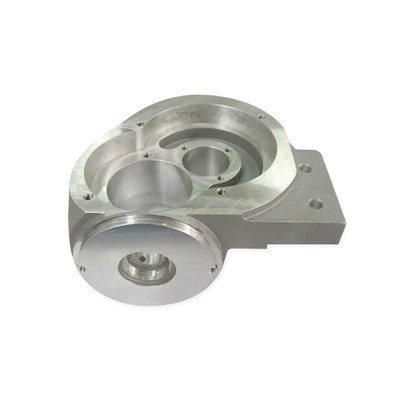
If you’re an electronics manufacturer who’s looking to upgrade your parts, reduce production costs, or bring a new product to market, we’re here to help. We work with small startups and large global brands, and every project gets the same level of attention to detail and commitment to quality. Contact our team to discuss your needs, and let’s turn your design ideas into parts that will stand the test of time.
Die Casting Parts References
- Die Casting Industry Association. (2023). Global Die Casting Market Report: Electronics Segment Analysis.
- Smith, J. & Lee, M. (2022). Precision Mold Design for Consumer Electronics Components. Journal of Manufacturing Processes, Vol. 81, pp. 452-461.
- International Electrotechnical Commission. (2021). Standards for Metal Components in Electronic Devices, IEC 62353:2021.
- Global Electronics Council. (2024). Sustainability in Electronic Manufacturing: Metal Recycling Case Studies.
Suzhou Ruide Die-Casting Mold Co., Ltd.
As one of the leading die casting mold manufacturers and suppliers in China, we warmly welcome you to buy durable die casting mold made in China here from our factory. All customized products are with high quality and competitive price. Contact us for pricelist.
Address: No.2, Wanchen Road, Huayang Village, Wangting Town, Xiangcheng District, Suzhou City, Jiangsu Province
E-mail: jada@cnrdmj.com.cn
WebSite: https://www.cnrdmold.com/
