If you’ve ever visited a construction site that relies on cold formed steel (CFS) sections, you know they’re the unsung heroes of modern building design. These lightweight, durable components show up in wall studs, roof trusses, floor joists, and even custom metal frameworks, offering a cost-effective alternative to hot-rolled steel. But here’s the thing that most people don’t talk about: even a minor deviation in straightness can derail an entire project. I’ve been in the CFS supply business for over a decade, and I’ve seen firsthand how a 1/8-inch bow in a 20-foot stud can turn a smooth installation into a day-long headache for contractors, or worse, create structural weaknesses that lead to costly delays. That’s why straightness isn’t just a quality metric for our team—it’s the foundation of every order we ship. Over the years, we’ve refined our processes to lock in accuracy, and today I want to pull back the curtain on how we ensure every CFS section that leaves our facility is as straight as an arrow. Cold Formed Steel Sections
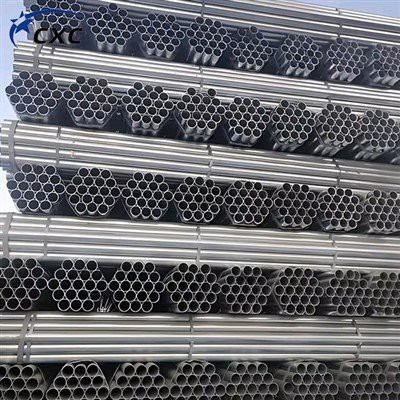
Let’s start with the basics: what defines straightness for cold formed steel? Unlike hot-rolled steel, which is shaped at high temperatures and naturally settles into a consistent profile, CFS is formed at room temperature. That means it’s prone to springback, a phenomenon where the steel bends slightly back toward its original shape right after it’s shaped by rollers. Springback might seem tiny on paper, but for a 40-foot roof truss chord, even a 0.25-degree bend can add up to an inch of misalignment at the end. Add in minor material inconsistencies from the steel coil, or wear and tear on our rolling machinery, and you’ve got a recipe for parts that don’t fit as intended. So our approach to straightness is two-fold: controlling every variable in the production line, and building checks that catch issues before a section is ever packaged for delivery.
First, we source our raw materials with intention. A CFS section is only as straight as the coil it’s cut from. Too many suppliers cut corners here, buying low-quality coils with uneven thickness or residual stress from the mill, which makes forming straight sections nearly impossible. We work exclusively with mills that provide certified steel, with strict tolerances for thickness, yield strength, and flatness of the coil itself. Before a coil even hits our production line, our quality team runs a 10-foot sample to check for flatness—if the sample shows more than 0.5 degrees of twist along its length, we send it back. That extra step costs us a bit upfront, but it saves us from hours of rework later, and it ensures our sections start with a uniform base. We also track coil batches closely: coils with higher yield strength (a measure of the steel’s ability to resist deformation) often require minor adjustments to our roller settings, so we note every batch’s specifications to tailor our process accordingly.
Next, our rolling line is calibrated and monitored around the clock. Cold forming happens as the steel coil passes through a series of precision rollers, each shaping the steel incrementally into its final profile (think C-channels, Z-channels, studs, or joists). The key here is to account for springback before it causes a bend in the finished part. We use a computerized roll design software that calculates springback for every profile we produce—for example, a 6-inch C-channel made from 16-gauge steel has a different springback amount than a 3-inch stud made from 20-gauge steel. Our technicians adjust the roller gaps and angles to pre-compensate for that springback, so once the steel exits the line, it settles perfectly straight. But calibration isn’t a one-time event. Every morning, before production starts, our lead operator runs a test section of the day’s coil batch and measures its straightness with a laser straightedge. If the test shows a deviation, we adjust the rollers immediately—no exceptions. We also do a full calibration check once every shift, replacing worn roller components as soon as they show 0.01-inch of play, even if they don’t seem to affect performance. A worn roller might not cause a noticeable bend in short sections, but over 30 feet of steel, that small play adds up.
Even with tight calibration, no production line is perfect, so we’ve built in layered in-process checks. Too many quality teams only inspect finished parts, but by then, defects are already locked in. Our line has three checkpoints: the first is after the forming rollers, the second after the cut-to-length saw, and the third before packaging. At the first checkpoint, we use a digital straightness gauge that runs along the length of every section as it moves down the line. The gauge measures for bow (bend along the length), camber (curvature from top to bottom), and twist (rotation around the section’s axis) and flags any part that deviates more than 1/16-inch from straightness for our technicians to rework. The cut-to-length saw is another critical spot: when we cut sections to a specific length, the force of the saw blade can slightly bend the end of the part. We added a small straightening roller right after the saw to correct that minor bend before it goes to the final checkpoint. For our largest sections (over 30 feet), we have a dedicated straightening station where two technicians manually check each part for twist—easy to miss in a smaller section, but a major issue in long joists.
We also have a strict rule about rework: we don’t ship any section that doesn’t meet our straightness standards. Early in my career, I made the mistake of letting a slightly bent section go to a job site to meet a deadline. A week later, I got a frantic call from the contractor saying the stud wouldn’t fit into the wall frame, and their team had to spend two hours straightening it on-site, delaying the project and costing them extra labor. That experience changed everything. Now, if a section is slightly bent, our technicians can run it through a cold straightening press that applies controlled pressure to bend it back to straightness, but only if it’s within a small deviation. If it’s more than 1/8-inch out, we scrap it. I’d rather scrap a few sections than damage our reputation for reliable, ready-to-use parts. Our customers—from small residential builders to large commercial construction firms—pay for consistency, and straightness is a big part of that.
Over the years, we’ve also invested in training our team to spot subtle straightness issues that machines might miss. Our operators aren’t just button-pushers; they’re trained to notice small variations in the steel’s feed, or slight noises from the rollers that might signal a misalignment. For example, a high-pitched whine from the roller line can mean a roller is slightly off-kilter, which would cause a bend in the finished part within a few feet. We hold monthly training sessions where we share photos and videos of good vs. bent sections, and we reward team members who catch a defect that a machine missed. That human element is what sets a good supplier apart from a great one—machines can run the numbers, but our team understands the end goal: parts that work for our customers, no extra work required.
I know some of our competitors will tell you that straightness standards are too strict, that 1/8-inch deviation is acceptable for most projects. But for us, that’s not good enough. A contractor doesn’t want to have to adjust every stud in a wall, or trim every truss chord to fit, when they’re on a tight timeline. We design our processes to eliminate that hassle from the start. That’s why we work closely with architects and structural engineers, too—when a customer is designing a custom CFS profile, we walk through their specs with them, advising them on how to adjust profile shape or steel gauge to ensure the straightest possible parts during production. For example, a 12-inch deep joist will have more natural rigidity than a 4-inch stud, so we can adjust our springback compensation settings accordingly, saving time during production and ensuring a straighter final product.

At the end of the day, ensuring straightness in cold formed steel isn’t just about equipment or processes—it’s about caring enough to prioritize quality over speed. When a customer orders CFS sections from us, they’re counting on those parts to fit together seamlessly, support the structure, and keep their project on track. We’ve built our business on that promise, and our straightness standards are one of the ways we deliver on it. If you’re working on a construction project and looking for CFS sections that are manufactured with precision, feel free to reach out to us to discuss your specific needs. We can walk you through our production process, share more about how we ensure straightness, and provide a customized quote for your project.
Galvanized Steel Pipe References
- American Iron and Steel Institute. (2020). Cold-Formed Steel Design Manual.
- Yu, W. W., & LaBoube, R. A. (2010). Cold-Formed Steel Design (4th ed.). John Wiley & Sons.
- Groover, M. P. (2019). Fundamentals of Modern Manufacturing: Materials, Processes, and Systems (7th ed.). John Wiley & Sons.
- Cold Formed Steel Engineers Association. (2021). Quality Control Guidelines for Cold Formed Steel Section Production.
Wuxi Chengxingchuang Metal Products Co., Ltd.
As one of the most professional cold formed steel sections manufacturers and suppliers in China, we’re featured by quality products and good price. Please rest assured to buy cheap cold formed steel sections for sale here from our factory. Customized orders are welcome.
Address: No. 8-2, Zhoujia Lane, Liangxi District, Wuxi City, Jiangsu Province, China
E-mail: 13961862735@163.com
WebSite: https://www.cxcsteeltube.com/
