Hey there, if you’re running a data center, server room, or even a commercial office with sensitive IT gear, you know your raised floor does way more than just sit there holding cables. It’s the unsung hero of airflow, cable management, and keeping your expensive hardware cool. But let’s be real—no one talks about how often you actually need to clean it, and get this: skip the right frequency, and you’re looking at overheating, dust buildup on servers, or even static shocks that fry your equipment. As a raised floor supplier who’s worked with hundreds of facilities over the last decade, I’m here to break down exactly what you need, no fancy jargon, just straight talk. Raised Floor
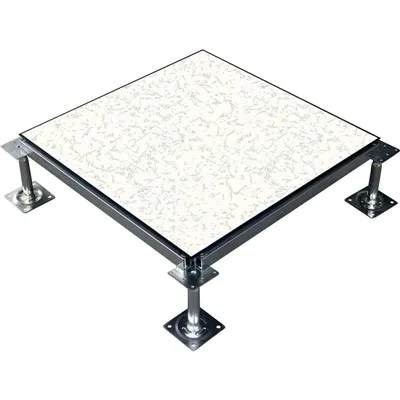
First, let’s get one thing straight: not all raised floors are the same. A small 100 sq ft server closet for a startup doesn’t have the same grime problem as a 10,000 sq ft data center that runs 24/7. But before we dive into frequency, let’s cover why cleaning even matters. Raised floors have tons of gaps between panels, and under them is a maze of cables, cooling ducts, and dust that drifts up through perforated panels straight into your servers. If you let that dust sit, it turns into a conductive mess—static discharge from dust particles can kill a motherboard, and clogs in the airflow path mean your AC has to work twice as hard, driving up energy bills and shortening hardware lifespan. No one wants to replace a $2,000 server because of a preventable dust issue, right?
Now, let’s start with the basics: how often you should do a quick daily touch-up. For almost every setup, a quick visual check and spot cleaning should be part of your daily routine. What’s that mean? Just a quick wipe of any spills (coffee from the break room, water leaks that seep through ceiling tiles) and a sweep of obvious crumbs or debris off the panels. If you have a high-traffic area—like near a door that’s propped open all day, or where staff wheel in new servers—you should do this daily, no exceptions. We once had a client who skipped daily spot cleaning for a data center entrance area; after a month, they had so much track-in dust from delivery trucks that their main rack’s intake fans clogged, leading to a 3-hour downtime that cost them $50k. Ouch. For smaller, low-traffic setups (like a home office with a single server), you can stretch daily to every other day, but still, keep an eye on obvious messes.
Next up, the deep clean—this is where most people mess up. I hear all the time, “I’ll just deep clean once a year,” but that’s a mistake for most facilities. Let’s split this into categories based on use case, because that’s how we structure our recommendations for customers:
-
Small to medium server rooms/offices (100–1,000 sq ft): These are the workhorses for startups, small businesses, and remote teams with in-house IT. For this size, we recommend a comprehensive deep clean every 3–6 months. Why so often? Even a 1,000 sq ft space has plenty of foot traffic, and dust from office carpets, printer toner, and even people’s clothes drifts onto the raised floor. Under-panel, that dust builds up faster than you think. Here’s what a deep clean for this size entails: first, lift a few panels (wear clean shoes, obviously—no dirt from the warehouse on your socks) and vacuum the under-floor area with a HEPA-filtered vacuum, not a regular shop vac. Regular vacs blow small dust particles around, which is the opposite of what you want. Then, wipe down each panel’s surface with a mild, non-abrasive cleaner—no harsh chemicals that can discolor the panels, especially if they’re painted steel or aluminum. For perforated panels (the ones that let air through), use a soft brush to clear the tiny holes so airflow isn’t restricted. We had a small marketing agency client who did this once a year, and their server’s airflow dropped by 20%—after a deep clean every 4 months, they fixed that without replacing any fans.
-
Mid-sized data centers (1,000–10,000 sq ft): This is the sweet spot for most colocation facilities or mid-sized companies with multiple racks. For these, the recommendation jumps to a deep clean every 2–4 months. Why? More racks, more servers running 24/7, higher airflow demands, and way more foot traffic (techs moving between racks, maintenance crews). Also, these spaces often have more people moving in and out, track-in from parking lots or loading docks, and even more toner dust from multiple office printers. A tip for mid-sized centers: schedule a “light deep clean” every month—this is just vacuuming the visible surface of panels and spot-checking under a few high-traffic panels, then the full deep clean every 3 months. We’ve had a colocation client who went from 4 months to 3 months, and their customer complaints about server overheating dropped by 35% in six months. That’s a big win for their service level agreements (SLAs).
-
Large enterprise data centers (10,000+ sq ft): These are the big boys—cloud providers, major corporations, hospitals that run critical patient systems. For these, we recommend a deep clean every 1–2 months. No exceptions. Here’s why: these facilities run non-stop, have hundreds of servers, and dust buildup can happen super fast. Also, many have under-floor cooling systems that rely on unobstructed airflow—even a thin layer of dust on dampers or under panels can throw off the entire cooling balance. We worked with a hospital client that tried to stretch to every 2 months instead of 1, and they had a near-miss where a server rack overheated during a busy flu season. That’s not just an equipment cost, that’s a patient safety risk. For these large spaces, we also suggest hiring a professional raised floor cleaning team once every 6 months—they have industrial HEPA vacuums and tools to clean under every panel without disrupting your hardware, which is way safer than your in-house IT team fumbling around with a vacuum.
Wait, but what about different types of raised floors? Let’s not forget that. If you have a vinyl-covered raised floor (the most common in offices), the cleaning is pretty straightforward—mild cleaner, soft cloth, no harsh scrubbing. If you have steel or aluminum panels for data centers, they’re more durable, but still need the same HEPA under-panel cleaning. If you have a static-dissipative (ESD) floor, you have to be extra careful with cleaners—make sure whatever you use is ESD-safe, because the surface coating is designed to prevent static, and the wrong cleaner can break that down, leading to static buildup that fries equipment. We always tell ESD floor clients to test any cleaner on a small, hidden panel first, just to be safe.
Also, there are a few myth-busters I want to get out of the way. First: “I can just blow the dust away with a compressed air can.” No—compressed air blasts dust particles into the air, and they land right back on your servers or under the floor. HEPA vacuums are non-negotiable. Second: “Sweeping the floor once a week is enough.” If you’re only sweeping the surface, you’re missing 90% of the problem—dust is building under the panels, where you can’t see it. Third: “New raised floors don’t need cleaning as often.” False! Even new floors have manufacturing dust, and once you start using the space, dust from the environment starts building up immediately. We have clients with brand-new floors that had to be deep cleaned twice in their first 6 months just to get rid of factory debris.
Now, let’s talk about signs you’re overdue for a clean, because sometimes even if you have a schedule, things change. If you notice any of these, move your cleaning timeline up:
- Server fans are running louder than usual (that’s usually because they’re working harder to pull air through dusty filters)
- Your AC energy bills went up 10% or more in a month (clogged airflow means your cooling system has to run longer)
- You see dust on top of your server racks or on the bottom of cables hanging from the floor
- Staff or techs report static shocks when touching server cases (that’s a sign of dust buildup causing static discharge)
Let’s wrap this up with a quick recap so you don’t have to flip back:
- Daily: Spot clean spills, debris, high-traffic areas
- Small setups: Deep clean every 3–6 months
- Mid-sized: Deep clean every 2–4 months, light deep clean monthly
- Large enterprise: Deep clean every 1–2 months, pro cleaning every 6 months

Cleaning your raised floor isn’t just a chore—it’s a small, cheap way to protect your most valuable equipment. If you’re not sure what your specific space needs, or you’re looking to upgrade your raised floor setup to make cleaning easier, reach out to us. We’ve helped hundreds of facilities adjust their cleaning routines and install floors that cut down on dust buildup in the first place. Whether you’re a small business owner with a server closet or a data center manager handling thousands of racks, we’ve got the solutions you need.
Steel Raised Acess Flooring References:
- American Society of Heating, Refrigerating and Air-Conditioning Engineers (ASHRAE). (2021). Data Center Standards: Thermal Guidelines for Data Processing Environments.
- National Fire Protection Association (NFPA). (2022). Standard for the Installation of Air Conditioning and Ventilating Systems (NFPA 90A).
- Raised Floor Industry Association (RFIA). (2020). Best Practices for Raised Floor Maintenance and Cleaning.
- Occupational Safety and Health Administration (OSHA). (2021). Guide to Cleanliness in Office and Industrial Work Environments.
Fineco Tech Co., Ltd.
As one of the most professional raised floor manufacturers and suppliers in China, we’re featured by quality products and good service. Welcome to wholesale customized raised floor made in China here from our factory. If you have any enquiry about cooperation, please feel free to email us.
Address: Wuyue Square, Wujin District, Changzhou, Jiangsu, China
E-mail: info@finecotech.com
WebSite: https://www.finecoglobal.com/
