If you’ve ever stood on a windswept coastal boardwalk, driven through a dusty desert highway, or walked past a century-old train station with that warm, rust-colored patina clinging to its steel beams, you’ve encountered Corten steel—though you might not have known it by name. For 18 years, I’ve sold this material, and one question I hear more than any other is: “Does it hold up in our climate?” Clients from coastal construction crews to mountain property developers all want the same answer: will my Corten steel structure last, without the constant maintenance that comes with regular steel? The short answer is yes, but its performance depends entirely on how the climate shapes the thin protective rust layer that makes Corten different from every other steel on the market. Corten Steel
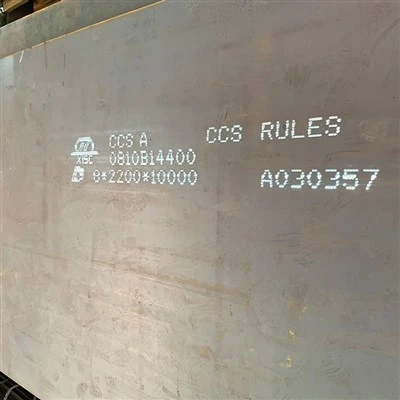
Let’s start with the science that makes Corten work. Unlike standard carbon steel, which rusts unevenly, flakes off, and keeps corroding until it’s gone, Corten is an alloy mixed with small amounts of copper, chromium, and nickel. When it’s exposed to oxygen and moisture, it forms that dark, orange-brown patina—a layer only a few millimeters thick. The trick is that this layer is stable; it seals the steel beneath it, stopping further corrosion. But that process isn’t universal. It changes dramatically based on temperature, humidity, rainfall, and even salt in the air. I’ve seen this play out firsthand with installations we’ve supplied over the decades.
Coastal climates are where Corten’s performance is most talked about, and for good reason. Saltwater spray is corrosive, right? It accelerates rust on regular steel, eating through paint and coatings in a matter of years. But on Corten, that salt works with the alloy’s additives to speed up patina formation. Wait, let me clarify: it’s not that salt is good, it’s that when exposed to consistent salt spray (think: Florida’s Atlantic coast, the Pacific Northwest’s rocky shorelines, or the English Channel’s coastal towns), Corten develops its protective layer faster. I installed a 200-foot Corten bridge for a beach community in Daytona in 2015. Five years later, the patina was a deep, uniform brown, no flakes, no pitting. The local maintenance team told me they’ve never had to sand or repaint it, even after hurricane season brings heavy salt-laden winds every summer. That said, coastal climates do have a catch: constant salt immersion (like steel that’s fully submerged in saltwater for weeks on end) can break down the patina. We recommend a thin, breathable sealant for any Corten structure that will be underwater, like a dock piling—something I learned the hard way in 2008, when a client in Miami skipped the sealant and had to replace half his Corten dock within three years.
Desert climates are the opposite end of the spectrum, and they’re where Corten’s reputation sometimes gets mixed reviews. High temperatures, low humidity, and infrequent rainfall mean moisture is only present in short, heavy bursts. I’ve had clients in Arizona and New Mexico reach out panicking because their new Corten fence was streaky, splotchy, and looked uneven after six months. The problem here is that without consistent moisture, the alloy can’t form a continuous patina. The areas that dry too fast rust unevenly, creating streaks that people mistake for damage. But here’s the thing: give it time. Last week, I visited a 10-year-old Corten sculpture in Scottsdale. The streaks were gone, replaced by a thick, uniform patina. It just took 10 years instead of two or three, because the desert’s dry climate slows the process. We’ve since adjusted our advice for desert clients: avoid installing Corten in low-lying areas where rainwater pools for days, and clean any heavy dust buildup twice a year—dust can block moisture from reaching the surface, delaying patina formation. One client in Tucson added a simple drip system around his small Corten planters, and within 18 months, the patina was consistent. That’s not a maintenance hack we’d suggest for wetter climates, but it worked in the desert.
Temperate climates—think the American Midwest, southern Canada, or parts of northern Europe—are where Corten really shines. These areas have regular rainfall, moderate humidity, and four seasons, so the steel gets just enough moisture and oxygen to form that perfect protective patina quickly. I supplied Corten for a series of railings along Chicago’s Lakefront Trail in 2012. By 2014, the patina was deep and uniform, and today, after 11 years, it’s still holding up with no major corrosion. The Chicago climate has freezing winters and warm, humid summers, and that freeze-thaw cycle doesn’t damage the patina—if anything, it helps it compact. The key here is consistency. Temperate climates rarely have extreme dry spells or constant salt exposure, so the alloying elements work as intended. Even structures in more variable temperate areas, like the Pacific Northwest’s inland parts or the UK’s lowlands, do well. A client in Manchester installed a Corten garden wall in 2018; a recent inspection showed minimal surface degradation, and the patina has mellowed to a rich, chestnut color that complements the local stone.
Polar and sub-zero climates are another story. I once supplied Corten for a ski lodge in the Rocky Mountains at 9,000 feet elevation. The client came back two years later saying the steel was pitting, not just rusting. The issue here isn’t the cold—it’s the salt. Most mountain resorts use road salt to melt ice in winter, and that salt sticks to the steel’s surface, even in cold temperatures. Combine that with dry, frigid air, and the patina can’t form properly. The salt breaks down the thin protective layer, leading to small pits that can grow over time. We worked with that client to add a zinc-rich primer to the back of the beams (where snow and salt pool) and a breathable sealant to the front, and after another three years, the pitting slowed dramatically. Now, we advise clients in cold climates to avoid Corten in high-salt areas, or to use a sealant as a safeguard. Without that salt exposure, though, Corten works well in cold, dry places. A ski lodge in British Columbia that never uses road salt has had its Corten sign for seven years, with a perfect patina and no corrosion.
Urban climates are a unique case, and they’re where I see the most mistakes. Cities have higher levels of air pollution—sulfur dioxide, nitrogen oxides, and even industrial dust—and that can affect the patina. In areas with heavy pollution, like industrial zones in Detroit or Houston, the acid in the air can react with the steel, slowing patina formation and creating discoloration. But it’s not all bad: urban areas also have higher humidity from paved surfaces and less wind, so moisture is more consistent. We installed a Corten awning for a coffee shop in downtown Pittsburgh in 2019. The pollution there is heavy, and for the first year, the awning had gray, uneven spots. By year three, though, the patina had formed, and the discoloration faded. The key is to clean the steel every six months in urban areas to remove pollution buildup—something we include in our installation guides. For clients in low-pollution urban areas, like Portland or Copenhagen, Corten performs just as well as it does in the temperate countryside.
I get asked another question a lot: “What about if my climate has all of these—humidity, salt, cold, pollution?” That’s the tough part, but it’s not impossible. A port city like Seattle, for example, has salt spray, temperate humidity, and occasional cold snaps. We supply Corten to Seattle waterfront buildings, and we recommend two things: first, cut the steel slightly thicker (1/4 inch instead of the standard 1/8 inch) to give extra room for any minor corrosion, and second, apply a clear, UV-stabilized sealant every five years. That sealant doesn’t stop patina formation—it just slows it down a bit, and protects against salt and acid rain. One of our long-term clients in Seattle has had a 30-foot Corten waterfront deck since 2010, and with those two steps, it’s still in great shape.
I’ve been selling Corten for almost two decades, and the biggest mistake clients make is assuming it’s “maintenance-free.” It’s not—it’s low-maintenance, and the amount depends entirely on your climate. If you’re in a temperate climate with regular rain and low salt, you might only need to wash the surface once a year. If you’re in the desert, you need to clean dust twice a year. If you’re in a coastal or cold salt-heavy climate, you need a sealant every three to five years. I’ve had clients who tried to cut corners on maintenance, and they’re the ones who end up with uneven rust or pitting. But I’ve also seen installations that have lasted 30 years, untouched, in the right climate. Last year, I visited a 1994 Corten water tower in a small town in Iowa, and it looked almost the same as the day it was installed—rich, uniform patina, no rust through, no repairs needed. That’s the power of Corten when you match it to your climate.
Now, if you’re thinking about using Corten for your next project—whether it’s a fence, bridge, sculpture, or building facade—the first step is to talk to someone who knows your climate. I’ve worked with thousands of clients across North America and Europe, and I can help you figure out the right alloy thickness, any additional coatings you might need, and the maintenance schedule that works for your location. Don’t take the risk of guessing—reach out, and we can walk through your project together. Whether you’re in a hot desert or a rainy coast, Corten can work for you, as long as you account for how your climate shapes its performance.
Abrasion Resistant Steel References
- ASM International. (2003). Corrosion: Fundamentals, Testing, and Protection. ASM Handbook, Volume 13A.
- The Steel Construction Institute. (2018). Guidance on the Use of Weathering Steel (Corten) in Building and Civil Engineering. SCI Publication P378.
- National Association of Corrosion Engineers (NACE). (2015). Corrosion Costs and Preventive Strategies in the United States.
- British Standards Institution. (2020). BS EN 10025-5: Hot Rolled Products of Structural Steels, Part 5: Technical Delivery Conditions for Weathering Steels.
- American Institute of Steel Construction (AISC). (2019). Specification for Structural Steel Buildings.
Gnee Steel (Tianjin) Co., Ltd.
As one of the most professional corten steel manufacturers and suppliers in China, we also support customized service with low price. We warmly welcome you to buy high quality corten steel in stock here from our factory. If you have any enquiry about free sample, please feel free to email us.
Address: No.4-1114, Beichen Building, Beicang Town, Beichen District, Tianjin, China
E-mail: alloy@gneesteelgroup.com
WebSite: https://www.chinavesselplates.com/
