Hey there! I’m a supplier of Reverse Osmosis (RO) membranes, and today I wanna chat about what the concentrate quality of RO membranes is all about. Reverse Osmosis Membrane
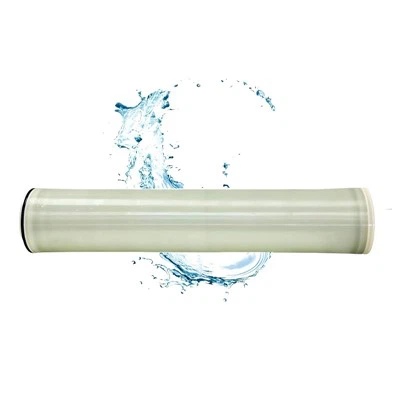
First off, let’s get a basic understanding of RO membranes. RO membranes are like the superheroes of water treatment. They’re used to remove a whole bunch of stuff from water, like salts, minerals, and other impurities. When water goes through an RO membrane, it gets separated into two streams: the permeate, which is the clean water that we can use for all sorts of things, and the concentrate, which is the water that has all the stuff that the membrane filtered out.
So, what exactly is the concentrate quality? Well, the concentrate quality refers to the characteristics of that leftover water. It’s important to know about the concentrate quality because it can tell us a lot about how well the RO membrane is working and what kind of impact it might have on the environment.
One of the key things about the concentrate quality is the concentration of dissolved solids. Dissolved solids are all the stuff that’s dissolved in the water, like salts, minerals, and other chemicals. When water goes through an RO membrane, the membrane traps a lot of these dissolved solids, so the concentrate has a higher concentration of them compared to the original water. The concentration of dissolved solids in the concentrate can vary depending on a few factors, like the quality of the feed water, the operating conditions of the RO system, and the type of RO membrane being used.
Another important aspect of the concentrate quality is the pH level. The pH level is a measure of how acidic or basic the water is. RO membranes can have an impact on the pH level of the water. Sometimes, the concentrate can be more acidic or basic than the original water. This can be a problem because it can affect the performance of the RO system and also have an impact on the environment if the concentrate is discharged.
The temperature of the concentrate is also something to consider. The temperature can affect the solubility of the dissolved solids in the water. If the temperature is too high, some of the dissolved solids might start to precipitate out, which can cause problems like scaling on the RO membrane. On the other hand, if the temperature is too low, the performance of the RO membrane might be affected.
Now, let’s talk about why the concentrate quality matters. For us as RO membrane suppliers, understanding the concentrate quality helps us to design and optimize RO systems. We can use the information about the concentrate quality to choose the right type of RO membrane for a particular application. For example, if the feed water has a high concentration of certain salts, we might choose an RO membrane that’s better at rejecting those salts.
From an environmental perspective, the concentrate quality is really important. If the concentrate is discharged into the environment without proper treatment, it can have a negative impact on the ecosystem. The high concentration of dissolved solids can make the water unsuitable for plants and animals. It can also cause problems like soil salinization if the concentrate is used for irrigation.
So, how can we manage the concentrate quality? One way is to treat the concentrate before discharging it. There are different methods for treating the concentrate, like evaporation, crystallization, and ion exchange. These methods can help to reduce the concentration of dissolved solids in the concentrate and make it more environmentally friendly.
Another way to manage the concentrate quality is to recycle it. We can reuse the concentrate in some applications, like industrial processes or cooling systems. This not only helps to reduce the amount of waste but also saves water.
As an RO membrane supplier, we’re always looking for ways to improve the concentrate quality. We’re constantly researching and developing new RO membranes that can reject more impurities and produce a higher-quality concentrate. We also work closely with our customers to understand their specific needs and design RO systems that can optimize the concentrate quality.
If you’re in the market for RO membranes and you’re concerned about the concentrate quality, I’d love to have a chat with you. We can discuss your specific requirements and see how our RO membranes can help you achieve the best possible concentrate quality. Whether you’re a small business looking for a simple water treatment solution or a large industrial facility with complex water treatment needs, we’ve got the expertise and the products to meet your needs.
In conclusion, the concentrate quality of RO membranes is an important aspect of water treatment. It can tell us a lot about how well the RO membrane is working and what kind of impact it might have on the environment. By understanding and managing the concentrate quality, we can design more efficient RO systems and reduce the environmental impact of water treatment. So, if you’re interested in learning more about RO membranes and how they can help you with your water treatment needs, don’t hesitate to get in touch. Let’s have a conversation and see how we can work together to solve your water treatment challenges.
Tubular Modules References:
- AWWA (American Water Works Association) publications on reverse osmosis technology
- Textbooks on water treatment and membrane processes
Hangzhou Nanoimp Environmental Technology Co., Ltd.
With abundant experience, we are one of the most professional reverse osmosis membrane manufacturers and suppliers in China. Welcome to wholesale high quality reverse osmosis membrane in stock here and get pricelist from our factory. We also accept customized orders.
Address: Road 25, Baiyang Street, Qiantang District, Hangzhou City, Zhejiang Province
E-mail: keith.wang@nano-sepmer.com
WebSite: https://www.nanoimp-membrane.com/
