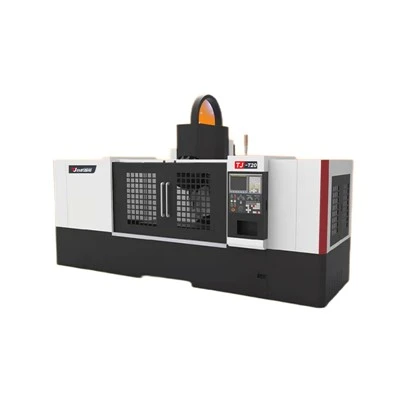
If you’ve spent any time on a shop floor lately, you’ve probably heard the same question come up at break rooms and CNC control consoles: “Is five axis machining actually worth the time we put into programming it?” I talk to job shop owners, aerospace precision leads, mold makers, and automotive prototyping managers every week, and the split is pretty clear. Some swear five axis cutting saved their entire 2023 production run, while others still stick to three axis mills, convinced the added setup and programming time will eat into any time savings they might see. Let’s cut through the noise: as a five axis machining center supplier that’s worked with 120+ manufacturers over the last seven years, I can tell you the answer to that question depends less on the machine itself and more on how you use it. But the short version? For 80% of the precision machining applications we support, yes – a well-run five axis setup cuts total machining time when you compare it side-by-side to traditional three axis methods. Five Axis Machining Center
Let’s start with the biggest time drain in traditional machining: setup. If you’re working on a complex part – think an impeller blade for a small aircraft, a custom mold insert with undercuts, or a medical bone plate with contoured surfaces – a three axis setup means you have to move the part multiple times on the vise. Each time you unclamp, rotate, and re-clamp, you’re looking at 20 minutes to two hours of work per setup, not to mention the time spent re-tramming the mill, zeroing new work offsets, and verifying alignment with a dial indicator or touch probe. For a part that needs three sides machined, that’s two setups minimum; for a part that needs five sides, that’s four or five. I worked with a medium-sized aerospace job shop in Detroit last year that was running small turbine blades on a three axis vertical machining center (VMC). Each blade took three setups, each 1.5 hours, plus an extra 45 minutes of inspection between setups to make sure alignment stayed tight. Total setup time per blade: 4.5 hours, plus 2.25 hours of actual cutting time, for a total of 6.75 hours per part. When we swapped them to a five axis machining center with a trunnion table that could rotate the part 360 degrees on two axes in the same vise, they cut setup to one 10-minute clamp. The machine’s tilting head let them machine every surface without repositioning. The total cutting time dropped by 42% – from 2.25 hours to 1.3 hours – and setup time fell to 10 minutes, bringing total part time to 1.4 hours. That’s not a 10% gain; that’s a 79% reduction in total time per part. For a 1,000-part order, that’s 5,350 hours saved – time that got them the job six weeks ahead of their three axis competitor, and won them a two-year contract.
Cuts like that aren’t just luck. They come from the core advantage of five axis machining: constant tool angle control. In three axis machining, the spindle only moves along X, Y, and Z, so you have to use long, skinny tools to reach features that are recessed, angled, or on the opposite side of a part. Long tools flex, right? That’s called tool deflection, and it means you have to run slower feeds and speeds to keep from breaking the tool or leaving a bad surface finish. I’ve seen three axis shops run a 1/8-inch ball nose end mill at 500 RPM feed rate for a contoured surface because any faster and the tool would chatter. In five axis machining, you can tilt the spindle or rotate the table so a shorter, stiffer tool stays perpendicular to the surface you’re cutting. That means you can run feed rates 2x to 5x higher than three axis for the same feature, no deflection, no chatter. The Detroit blade shop we worked with ran their contour passes at 1,800 RPM with the same 1/8-inch tool, compared to 450 RPM on their three axis machine. That’s a fourfold speed increase for the most time-consuming part of cutting the blade. For aerospace parts, where surface finish and dimensional tolerance are non-negotiable, that’s not just faster cutting – it’s faster cutting without sacrificing quality, so you don’t have to spend extra time polishing or reworking the part after it comes off the machine.
But wait – I know what some of you are thinking. “What about programming time? Isn’t five axis programming way more complicated, and won’t that eat into any time savings?” It’s a fair question, and it’s the reason a lot of shops hold back. Ten years ago, five axis programming required a master’s degree in CAM software and years of training, which put a lot of small shops off. Today? Modern CAM software (most of which we integrate directly with our five axis machines) has full simulation tools that auto-generate collision checks, and post-processors that are tailored to specific machine models. A programmer who’s proficient in three axis CAM can learn the basics of five axis programming in a week, and most of that extra work is automated. We worked with a mold maker in Ohio last year who was running complex cavity molds on a three axis VMC. Their programming time per mold was 8 hours, and their machining time was 12 hours, with three setups. They switched to a five axis horizontal machining center (HMC) that same year. Their programming time increased by just 2 hours – because the CAM software auto-programmed tilt positions for all the undercuts – and their machining time dropped to 4 hours, with one setup. Total time per mold went from 20 hours to 6 hours. That’s not a net increase in programming time; that’s a net gain of 14 hours per part. For a shop that runs 20 molds a month, that’s 280 extra hours of production time every month – time you can use to take on more jobs, or get orders out faster.
Of course, five axis machining isn’t the right fit for every job. If you’re cutting a simple, flat steel plate that only needs two holes drilled, a three axis VMC will do the job in 15 minutes, and setting up a five axis machine would take longer than actually machining the part. The sweet spot for five axis machining is parts with complex surfaces, undercuts, multiple features on different sides, or tight dimensional tolerances. We also see big wins for high-mix, low-volume production – where you run a lot of different parts, each with unique features – because you don’t have to spend time setting up multiple vises for each new part. For high-volume production runs, five axis also wins because you can run unattended for longer, since there’s no need to check alignment between setups. The Ohio mold shop runs their five axis machine unattended overnight for 8-hour shifts, something they couldn’t do with three axis because they had to re-clamp parts every cycle. That means their operators are free to run other jobs during the day, cutting labor time too.
I want to be clear: I’m not here to say five axis is a silver bullet. We’ve seen shops buy a five axis machine and still run it like a three axis machine, which means they waste the extra capabilities and don’t see any time savings. A lot of that comes down to setup: if you’re still using the same vises and workholding you used for three axis, you’re not going to get the same five axis benefits. We work with every customer we sell a five axis machine to on custom workholding – trunnion tables, vacuum chucks, tombstone setups – that lets you hold parts securely while rotating and tilting. We also offer on-site training for operators and programmers, because even the best machine won’t save you time if your team doesn’t know how to use its full capabilities.
Another common myth: five axis machining is only for big companies with big budgets. In reality, five axis machining centers are available for every shop size, from small job shops with 10 employees to large aerospace manufacturers. A 5-axis VMC for a small shop that’s running parts with complex surfaces costs roughly 20% more than a comparable three axis VMC, but the time savings will pay back that extra cost in 12 to 18 months for most applications. We have a customer in Indiana, a 12-person job shop that makes custom parts for the agricultural industry, who bought a used five axis machining center three years ago. They spent $35,000 on the machine, plus $5,000 on training and workholding. In the first year, they saved $42,000 in labor and production time, and won three new contracts they wouldn’t have been able to bid on with their old three axis machines. Today, their five axis machine makes up 60% of their production, and they’ve already upgraded to a newer model with better CAM integration.
Let’s also talk about the hidden time costs of traditional machining that most shops overlook. When you have multiple setups, you have to spend time inspecting parts between setups to make sure alignment is correct. That adds extra time, and if there’s an alignment error, you might scrap the part. With five axis machining, you have one setup, so you eliminate those inspection steps between setups. We’ve also seen shops save on tooling costs, because they use shorter tools that last longer. A long tool might need to be replaced every 10 parts, while a shorter, stiffer tool can last 50 parts, so you spend less time changing tools and more time cutting. That’s another hidden time gain that doesn’t show up in the basic “setup vs. machining time” comparison.
So, to circle back to the original question: can a five axis machining center reduce machining time compared to traditional methods? The answer is yes – when it’s used for the right parts, with the right setup and training. The key isn’t buying a five axis machine just because it’s new, it’s evaluating your current parts: which ones take the most setups, the longest tool paths, or the most inspection time? Those are the parts that will show the biggest gains. If you’re running simple, flat parts, stick with three axis. If you’re running parts with complex surfaces, undercuts, or multiple features on different sides, five axis is almost always the better choice for time, quality, and profitability.
At the end of the day, machining is all about speed, quality, and profitability. If your current process is taking too long, leaving money on the table, or losing you jobs to competitors who can turn parts around faster, it’s worth looking at five axis machining. We’ve spent years refining our machines to be user-friendly, affordable, and tailored to the needs of manufacturers of all sizes, and we work side-by-side with every customer to make sure they get the most out of their investment. If you’re curious about how five axis machining could cut your production time, we’re here to walk through your specific parts, your current setup, and show you exactly what kind of savings you could see. Reach out to us today to learn more about how five axis can streamline your machining process.
Vertical Machining Center References
- DeVries, W. R. (2015). Analysis of Material Removal Processes. Springer.
- Smith, G. T. (2020). CNC Machining: Theory and Practice. Industrial Press.
- American Society of Mechanical Engineers (ASME). (2018). Five-Axis Machining: Capabilities and Applications for Modern Manufacturing. ASME Press.
- Tonti, G. (2019). “Productivity Gains in Five-Axis Versus Three-Axis Machining for Complex Aerospace Components.” International Journal of Machine Tools and Manufacture, vol. 145, p. 103412.
- Boschert, S., et al. (2021). “Workholding Optimization for Five-Axis Machining of Medical Implants.” Journal of Manufacturing Processes, vol. 64, pp. 892-901.
Guangdong Taiji Intelligent Equipment Co., Ltd.
With abundant experience, we are one of the most professional five axis machining center manufacturers and suppliers in China. Please feel free to buy cheap five axis machining center for sale here from our factory. For price consultation, contact us.
Address: Room 107, Building 15, No. 911 Jian’an Road, Chang’an Town, Dongguan City, Guangdong Province
E-mail: sale@gdtaijicnc.com
WebSite: https://www.gdtaijicnc.com/
