If you’ve ever walked the floor of a manufacturing facility that produces PPR (Polypropylene Random Copolymer) pipes, you know how non-negotiable it is to keep operations running smoothly. As a PPR pipe machine supplier, I get dozens of calls every week from plant managers, production supervisors, and maintenance leads asking the same question: “What’s the deal with the status indication function on these machines, and why does it matter more than I thought it did two years ago?” PPR Pipe Machine

I started in this industry back in 2007, when PPR pipes were still a relatively new product in many regional markets. Back then, status indicators on our machines were basic—just a handful of light bulbs: green for “running,” red for “stopped.” That was it. We’d get calls at 2 a.m. from clients panicking because the red light was on, but by the time the maintenance team showed up, they’d realized it was just a minor sensor glitch, and they could have gotten the line back up in 10 minutes instead of two hours. That’s the problem with old-school status indication: it’s not just unhelpful—it’s costly. Modern PPR pipe machine status indication functions have evolved from a simple “on/off” signal to a comprehensive system that prevents downtime, improves product quality, and even extends the lifespan of the equipment. Let me break this down the way I break it down for my team during training, and for our clients during onboarding sessions.
First, let’s get clear on what we’re actually talking about here. A PPR pipe machine is a complex assembly of extruders, cooling tanks, calibrators, haul-off units, and cutting systems. Each of these components has dozens of sensors, motors, heaters, and control modules. The status indication function is the machine’s central nervous system’s “voice”—it takes data from every single part of the line and translates it into clear, actionable information for operators. It’s not just showing if the machine is working; it’s showing how it’s working, where it’s having trouble, and what that trouble means for the pipes coming off the line.
Let’s start with the core of the status indication function: real-time operational monitoring. This is the foundation. When a PPR line is running at full capacity, every parameter matters. The extruder’s barrel temperature needs to stay within a specific range (usually between 200 and 260 degrees Celsius, depending on the PPR grade) to ensure the polymer melts evenly. If the temperature drops just 10 degrees, the extrudate becomes lumpy, and the pipe wall will have weak spots. If it rises too high, the polymer degrades, leading to brittle pipes that fail pressure tests.
A good status indication function monitors all these parameters live. It doesn’t just show “temperature” — it shows the temperature of each barrel zone, the die head, and the adapter. If one zone is drifting outside the setpoint, the system doesn’t just flash a vague “error” light. It displays, right on the human-machine interface (HMI) screen, “Extruder Zone 3 temperature: 192°C, setpoint 215°C. Adjust heater power or check sensor connection.” That’s actionable data. Operators don’t have to guess what’s wrong—they know exactly where to look. For a client running three shifts with a small team, this is a game-changer. I had a client in Mexico last year who told me that after upgrading to our lines with this feature, they reduced temperature-related downtime by 72% in their first six months. That’s hundreds of thousands of dollars in savings, just from a better status system.
Next, there’s production status tracking, which is more than just “running” or “stopped.” A modern status indication function will categorize the line’s state into specific modes: normal production, setup, material changeover, cleaning, or fault. Why does this matter? Because material changeovers for PPR lines aren’t trivial. If you’re switching from a 20mm cold water pipe to a 110mm hot water pipe, you need to adjust calibrator size, haul-off speed, pressure, and temperature. A clear status indicator that says “Changeover Mode: Calibrator Size Adjustment Required” helps operators follow the right sequence, skip mistakes, and cut changeover time by up to 30%. One of our European clients told me that before our machines, their changeovers took an average of 45 minutes; now they take 28 minutes, and the scrap rate during changeovers dropped from 8% to 2%. That’s not just efficiency—it’s less waste, more revenue from good product, and happier clients for their own business.
Then there’s predictive fault indication, which is where the status function stops being reactive and becomes proactive. Early PPR machines would only alert you when something was already broken—like a motor seizing or a sensor failing. Modern status systems use historical data and real-time analytics to spot patterns that mean a fault is coming. For example, if the haul-off unit’s motor current has been slowly increasing over the last two hours, that’s a sign the drive belt is starting to wear out. The status function won’t wait until the belt snaps and stops production. It will show a warning: “Haul-off Motor Current: 18A, trending upward. Schedule maintenance within 8 hours to avoid unplanned downtime.”
This is huge for production planning. Plant managers can schedule maintenance during planned shutdowns, not in the middle of a run that’s supposed to fulfill a big order. I had a client in India who used to have an average of two unplanned shutdowns per month. After implementing our status indication system, that dropped to 0.3 per month. They told me that last year, they avoided a shutdown that would have cost them $120,000 in lost revenue and late fees on a major project. That’s the value of a status function that doesn’t just tell you something is wrong—it tells you it’s about to go wrong, so you can act ahead of time.
Quality-related status indication is another key part that a lot of people overlook. PPR pipes have to meet strict standards for pressure resistance, wall thickness, and roundness. If the calibrator isn’t holding the right vacuum, the pipe wall will be uneven, and the product will fail inspection. Old status systems might just say “calibrator pressure low,” but modern systems link status to quality parameters. A good HMI will display real-time wall thickness readings next to the calibrator vacuum status, and if the wall thickness deviates, it will link that deviation to the root cause: “Wall thickness at 110mm: 3.8mm, setpoint 4.2mm. Calibrator vacuum at -0.04MPa, setpoint -0.06MPa. Adjust vacuum pump to correct wall thickness.” This means operators can fix quality issues before they produce a batch of scrap, which is critical for high-volume production where even a small scrap rate adds up fast.
Now, let’s talk about accessibility, because a status indication function is only useful if the operator can actually use it. A lot of older machines have status panels that are hard to read in bright factory light, or HMI screens that are cluttered with too much data and no clear way to prioritize alerts. Modern systems that we build as a supplier are designed with operator input—we work with frontline operators to make sure the status display is intuitive. Alerts are color-coded: green for normal, yellow for warning (needs attention soon), red for critical (stop production immediately). Alerts are also prioritized so that the most urgent issue pops up first, not buried under a dozen less important ones. We also offer remote access, so managers or maintenance teams can check the status of a line from their office, or even from a mobile device on the floor, without having to crowd the operator’s station. That’s a big one for facilities with multiple lines spread out across a large plant.
I want to be clear: not all status indication functions are created equal. As a PPR pipe machine supplier, I’ve seen cheaply built machines that have basic lights and a simple screen, but no real analytics or connectivity. Those might work for small, low-volume operations, but they won’t deliver the value we’re talking about. The best status indication systems are integrated into the entire machine control architecture, not an afterthought add-on. They’re customizable too—operators can adjust what parameters are monitored, what alerts they get, and how the data is displayed, based on their specific product and production goals.
Let’s also address a common misconception: some people think more data means more confusion. But when the status function is designed well, it cuts through the noise. Instead of operators having to monitor 10 different gauges every second, they can glance at the HMI and get a complete picture of the line’s health. That reduces operator fatigue, which in turn reduces human error. I’ve seen operators make fewer mistakes on lines with good status systems because they’re not overwhelmed with information.
So, when a plant manager asks me “what is the status indication function of a PPR pipe machine?” I don’t just give them a textbook definition. I tell them it’s the difference between working 12-hour shifts putting out fires and working efficiently, meeting deadlines, and making quality product. It’s the tool that turns a machine from a piece of equipment that runs or stops into a system that tells you how to make it run better, longer, and with less waste.
At the end of the day, every PPR pipe producer’s bottom line depends on uptime, quality, and efficiency. The status indication function isn’t a fancy add-on—it’s a core feature that directly impacts all three. If you’re looking to upgrade your PPR pipe line, or if you’re just starting out and want a machine that will support your growth, don’t underestimate the importance of a well-designed status system.
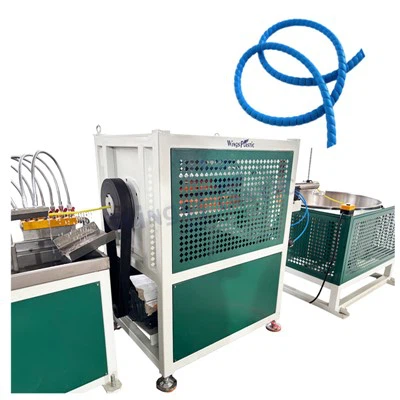
If you’re ready to learn more about how our PPR pipe machines’ status indication functions can help your operation run smoother, with less downtime and higher quality, we’re here to help. We can walk you through real client case studies, show you a demo of our HMI, and answer any questions you have about how the status system will fit your specific production needs.
PPR Pipe Machine References:
Polypropylene Pipe Manufacturing: Technology and Quality Assurance. Plastics Pipe Institute, 2021.
Extrusion Process Control for Thermoplastics. Hanser Publishers, 2019.
Efficiency Improvements in PPR Pipe Production Lines. Journal of Plastics Technology, vol. 17, no. 2, 2020, pp. 45-58.
Qingdao Wings Plastic Technology Co., Ltd.
As one of the most experienced ppr pipe machine manufacturers and suppliers in China, we also support customized service. Please feel free to buy durable ppr pipe machine made in China here from our factory. For price consultation, contact us.
Address: C02 Of Anshengyi Road, No.2 Fuan Industry Zone,Jiaodong Town, Jiaozhou City, Qingdao City, Shandong Province,China
E-mail: kelly@wingsplastic.com
WebSite: https://www.wingsextruder.com/
